Hi, I'm Christophe and I'm a student in early childhood education. I studied this topic for the last two years and a half. Early childhood education is a program when you learn the development of children between the age of 0 to 12 years old. This glossary could help parent understand some vocabulary their educator, nurse or pediatrician could use to talk about their children. This 20 words glossary will be more focus on the development side. I found all the different definition and vocabulary in books I used to learn the theory. Those books have been written by professional. This glossary will be useful for me and the parent of my future group who are first language is English. It will make the communication easier for all of us.
A need
Noun
circumstances in which something is necessary, or that requires some course of action; necessity.
Example: Fabrice first need is eating, sleeping and going to the bathroom.
en: Un besoin
Active learning
Noun
Active learning is an approach to instruction that involves actively engaging students with the course material through discussions, problem solving, case studies, role plays and other methods.
Example: Rosaly learns about mass density by putting random object in water and seeing if they float or not. This is active learning.
en: Apprentissage actif
Attachment figure
Noun
The most important tenet is that young children need to develop a relationship with at least one primary caregiver for normal social and emotional development.
Example: George attachment figure are his mother and father.
en: Figure d'attachement
Bronfenbrenner's modal
noun
Bronfenbrenner's ecological systems' theory views child development as a complex system of relationships affected by multiple levels of the surrounding environment, from immediate settings of family and school to broad cultural values, laws, and customs.
Example: Nadia uses Bronfenbrenner's modal to study which surrounding influence Ana in her development.
en: Modèle de Bronfenbrenner
cognitive development
Noun
Cognitive development means how children think, explore and figure things out. It is the development of knowledge, skills, problem solving and dispositions, which help children to think about and understand the world around them. Brain development is part of cognitive development.
Example: Igor is doing a puzzle, this activity is practicing his cognitive development
en: Développement cognitif
Early childhood center
Noun
An early childhood education and care centre is defined in Education and Training Act 2020 as “premises used regularly for education or care of 3 or more children (not being children of the people providing education or care, or children enrolled at a school being provided with education and care before or after school) under the age of 6.
Example: Damien goes every morning in an early childhood center. His mother will get him after the work.
en: Centre de la petite enfance
Educational intervention
Noun
Educational interventions provide students with the support needed to acquire the skills being taught by the educational system and should address functional skills, academic, cognitive, behavioral, and social skills that directly affects the child’s ability access an education.
Example: Amelia prepares an educational intervention which is a story about sharing to help children improve their social skills.
en: Intervention éducative
False-dilemma
Noun
is an informal fallacy based on a premise that erroneously limits what options are available.
Example: The educator should not give a false-dilemma to Etienne
en: Faux-choix
Field of interest
Noun
a special interest or skill; a special subject of study, line of work, skill, or the like on which one concentrate
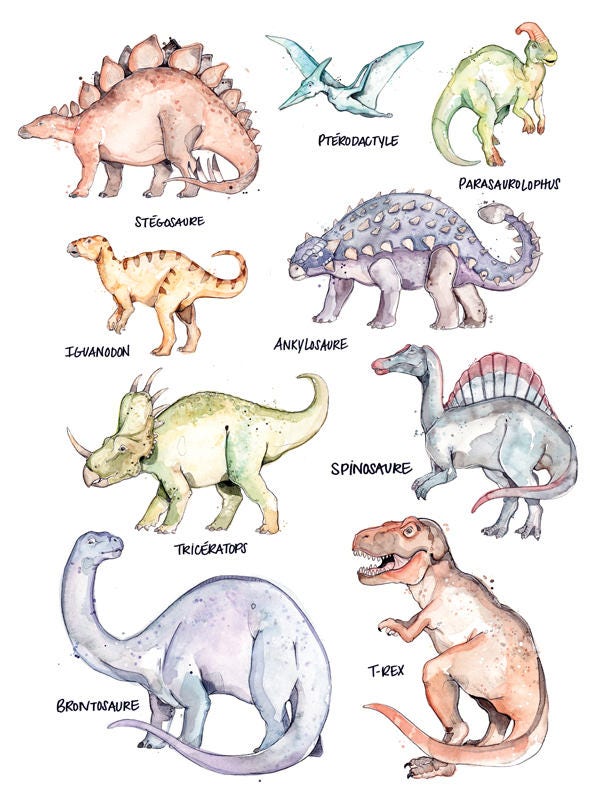
Example: Hector field of interest are dinosaurs.
en: Champ d'intérêt
Intervention
Noun
The act of interfering with the outcome or course especially of a condition or process (as preventing harm or improve functioning).
Example: Melodie uses an intervention to help children develop their ability to communicate their emotion.
en: Intervention
Language development
Maslow's pyramid
Noun
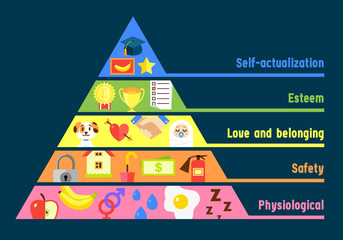
Maslow's hierarchy of needs is a motivational theory in psychology comprising a five-tier model of human needs, often depicted as hierarchical levels within a pyramid.
Example: Christina uses Maslow's pyramid to find where Jessica's need are in priority.
en: Pyramide de Maslow
Mimicry
Noun
the action or art of imitating someone or something, typically in order to entertain or ridicule.
Example: Child uses mimicry to learn new ability, skill or interest.
en: Mimétisme
Motor and physical development
Noun
Motor development is part of physical development, and refers to the growth in the ability of children to use their bodies and physical skills.
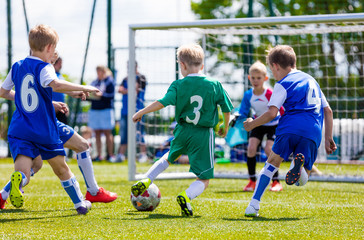
Example: By playing soccer, Jame is doing an activity that does motor and physical development
en: Développement physique et moteur
Natural consequence
Noun
Natural consequences are those things that happen in response to your child's behavior without parental involvement. These are imposed by nature, society, or another person. You do not actually deliver a natural consequence yourself. Instead, you allow nature or society to impose the consequence on your child by not interfering.
Example: Quenville don't want to put his coat to go play outside. His educator let him do it. Quenville starts being cold when he is outside. This is a natural consequence.
en: Conséquence naturelle
Object permanence
phrase
Object permanence describes a child's ability to know that objects continue to exist even though they can no longer be seen or heard.
Example: Sophia knows that her dog is still at home when she goes to the daycare. She has the object permanence.
en: Permanence de l'objet
Proximal zone of development
Noun
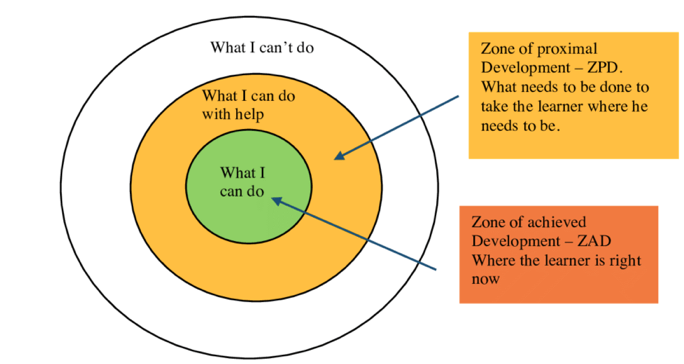
The zone of proximal development refers to the difference between what a learner can do without help and what he or she can achieve with guidance and encouragement from a skilled partner.
Example: Liam can get dress by himself, Matteo still needs helps from the educator, their proximal zone of development are different.
en: Zone proximal de développement
Reassuring presence
Phrase
The fact that someone proximity is calming another person only by him or her being there.
Example: Nathan, the educator goes sitting next to Oliver who is crying. His reassuring presence make him stop crying and Oliver start explaining by himself why he was sad.
en: La proximité rassurante
Social and emotional development
Noun
Social and emotional development means how children start to understand who they are, what they are feeling and what to expect when interacting with others.
Example: Kennedy by telling what he did yesterday at home make the other children learn how to wait for their turn before telling other people their story.
en: Développement sociaux-affectifs
Temperament
Noun
a person's or animal's nature, especially as it permanently affects their behavior.
Example: Bianca has a slow temperament who makes her adaptability to a situation more challenging.
en: Tempérament
Timely help
Phrase
at the right or an opportune or appropriate time.
Example: Patrick sees one child struggling to open a box. He waits to let the child try. When he sees the child start abandoning, he goes to him giving him advise or questioning him why he is not able to do it. This helps the perseverance and founding solution.